Intermediate tyre
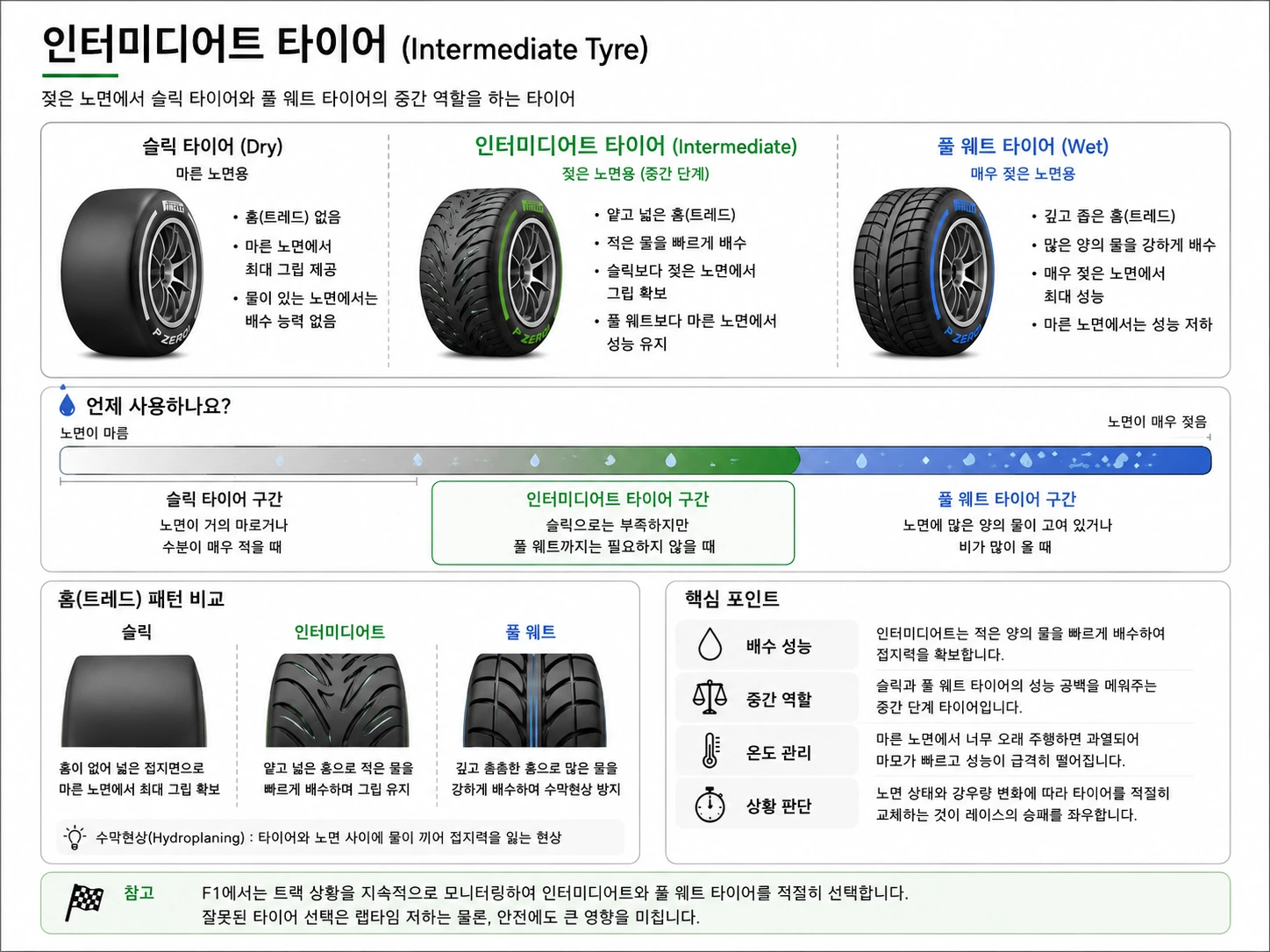
인터미디어트 타이어
These are the tires used when the track surface is slightly wet but not enough to warrant full wet tires. They have drainage capabilities that can expel up to 30 liters of water per second at speeds of 300 km/h.
🏆 Race Case Study
2021 Russian GP — Norris's Late Switch to Intermediates
Late in the 2021 Russian Grand Prix, rain began to fall while Lando Norris was leading the race. Norris initially chose to remain on slick tires, but as the rain intensified, the track became too wet to maintain sufficient grip. Drivers who switched earlier to intermediate tires gained a significant advantage in the changing conditions. Norris eventually made the switch, but only after losing substantial time, making the race a memorable example of how crucial tire timing can be in mixed conditions.
📺 Race Context & Viewing Tips
Frequently asked questions
When are intermediate tires used in F1?
What is the difference between intermediate and full wet tires?
🔎 Looking for another F1 term?