Old tyres
There is no time lost to a pit stop, but the pace can gradually fall away as the tyres degrade.
- Keep running on the same set
- Tyre performance degrades
- Lap times drop away
F1 GUIDE 06
Why a pit stop changes the order of a race
When a team changes tyres can change the order of a race. This guide walks through the basics of F1 strategy: the pit stop itself, the undercut and overcut, and what happens when a Safety Car comes out.
A pit stop costs time straight away. Teams still come in because the gain from a fresh set can be bigger than the performance an already well-used set has lost.
There is no time lost to a pit stop, but the pace can gradually fall away as the tyres degrade.
Time is given up once, in exchange for better pace afterwards.
The question Can the time lost in the pits be won back with the speed of new tyres?
A pit stop is not just the moment the car is stationary. It starts the instant the car turns off the racing line and ends when it rejoins the track.
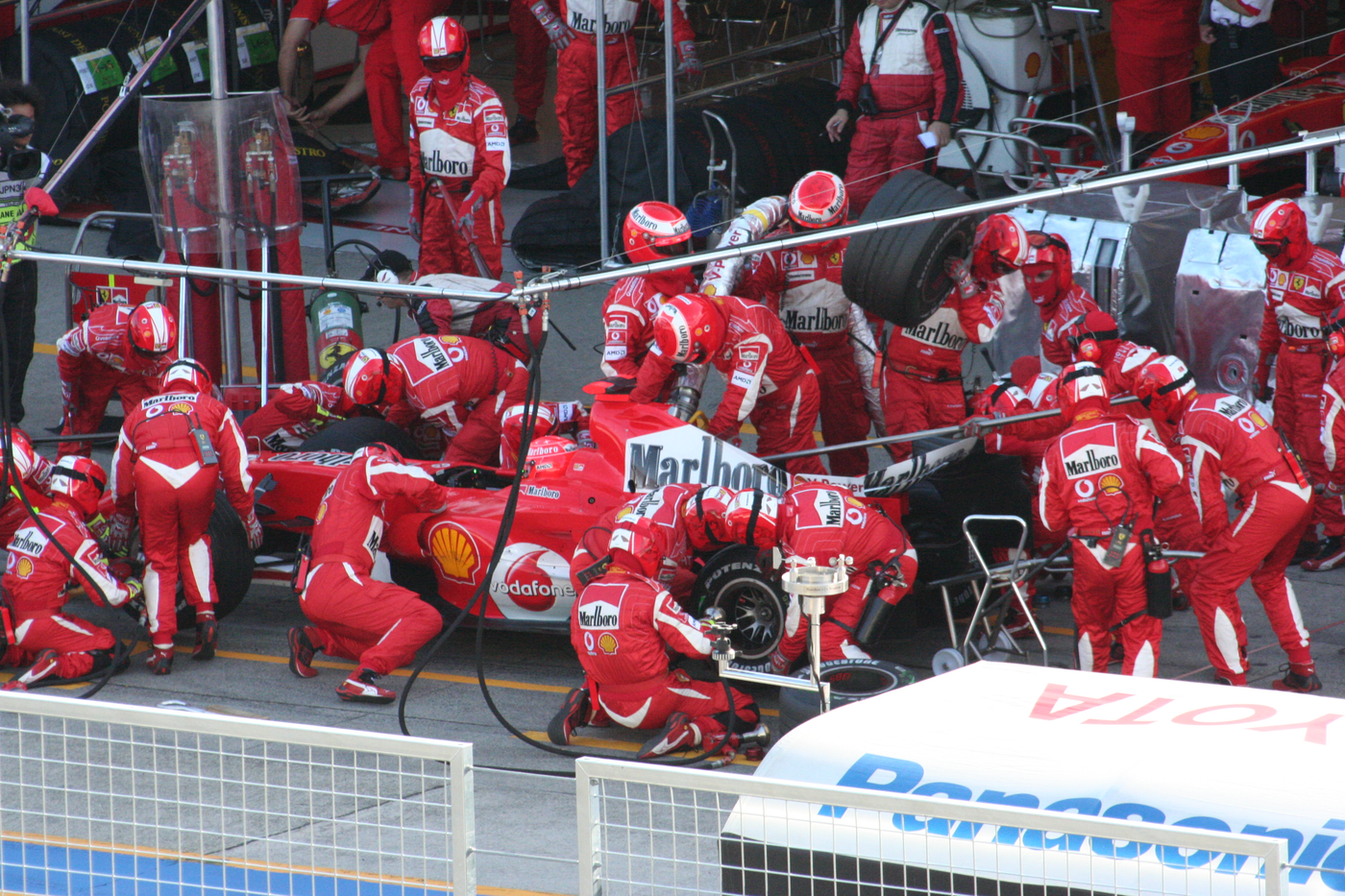
Worth knowing The tyre change time shown on a broadcast is not the same as the total time a pit stop costs. The stationary work can be very quick, but the lap is also slowed by the pit entry, the speed-limited pit lane and the exit.
How much a stop costs is different at every circuit, because the pit lane length and layout are different. That is why this guide does not quote a single number.
A pit window is the rough stretch of laps in which a team would consider stopping for the strategy it is running. It keeps shifting with the tyre condition, the traffic and what rivals are doing.
LAP
← too early too late →
Not a fixed range A pit window is a concept, not a fixed set of lap numbers. It moves with the strategy a team is on, the state of the tyres, the traffic ahead and what the rest of the field is doing. The laps on the scale above are only there to show the idea.
Two cars fighting for the same position rarely pass each other on track. More often the move happens through the timing of their pit stops.
No guarantees An undercut or an overcut does not always work. Which one is even available depends on the situation.
Sometimes staying out is not about tyre life at all. It is about not giving up the place you are already in.
A hypothetical example used to explain the concept, not a real race result.
P3 stays out
P6 after the stop
The question Is the pace advantage of new tyres enough to get back past the cars ahead?
At circuits where overtaking is hard, track position can be worth relatively more. If the performance gap to a fresh set is big enough, giving up the place and stopping can be a valid strategy too.
What a Safety Car or VSC actually is belongs in the flags guide. Here we only look at one thing: what it does to the cost of a pit stop.
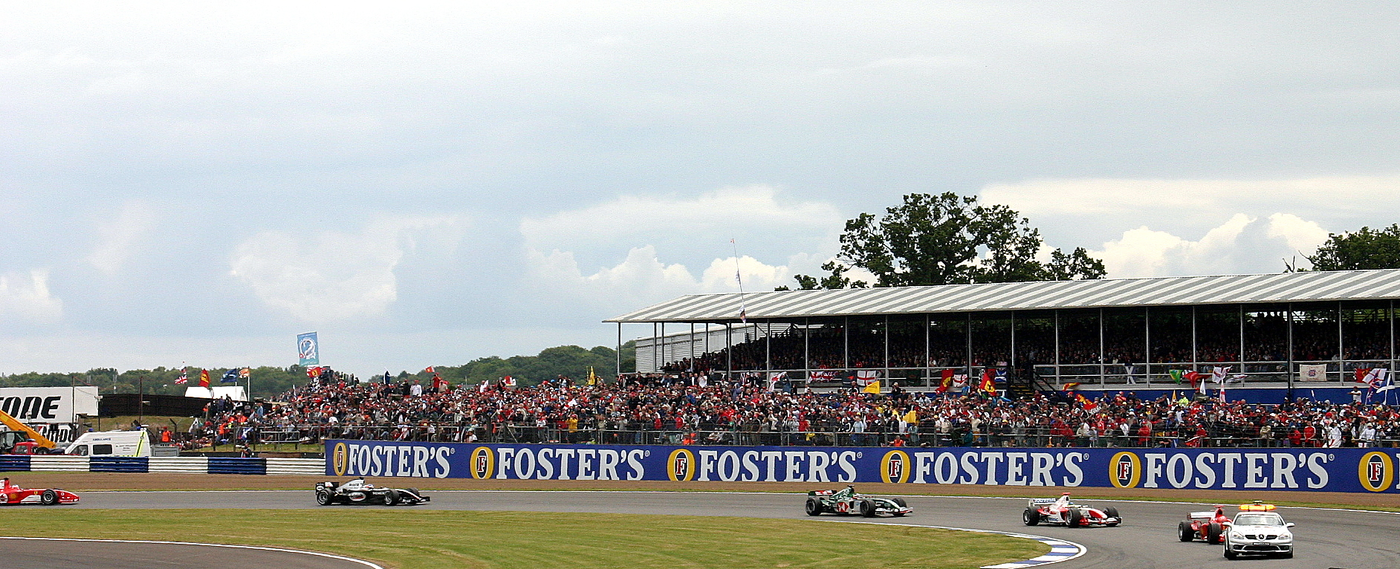
About the term free stop Broadcasts sometimes call this a free stop. It does not mean a pit stop with no time loss at all. Time is still lost, it is just that less of it is lost relative to the cars that stayed out. Whether stopping is right still depends on the tyres, the track position, whether the pit lane can be reached and when the neutralisation began.
Want to know what a Safety Car and a VSC actually are? Flags & Safety Car guide →
Both cars of a team use the same team pit box and the same crew. So when they come into the pits close together, they have to be serviced one after the other. That is a double stack.
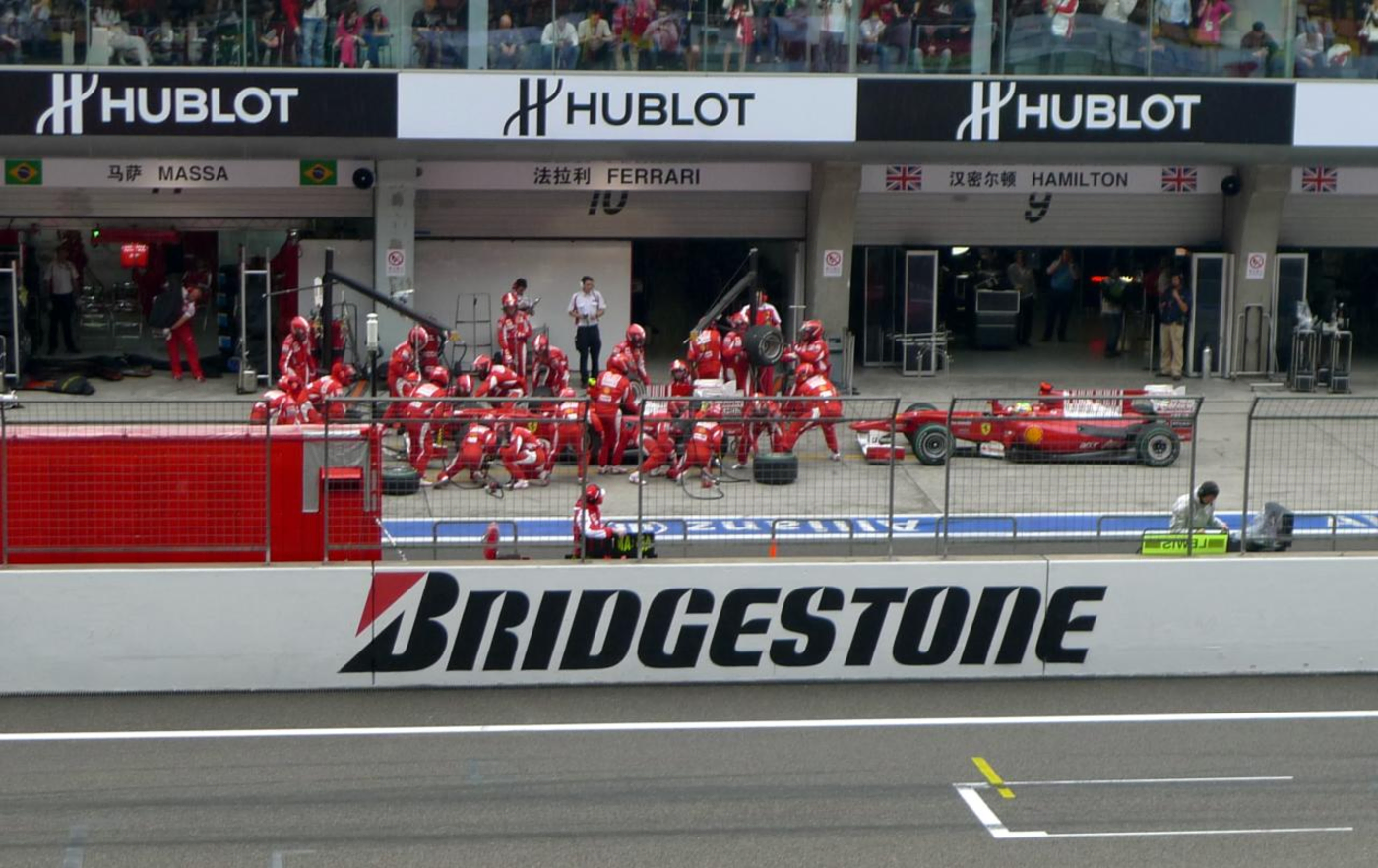
Warning If the gap between the two cars is not big enough, or the pit lane is busy, the second car loses time waiting for the crew.
A double stack is most often seen when a Safety Car or VSC gives both cars a reason to stop on the same lap.
A pit call is never made on one number. Several things are weighed up at the same time, and the answer changes lap by lap.
A simplified view of what goes into a pit decision. It is not a real team tool and shows no live data.
PIT NOW?
OR
STAY OUT?
The same set of inputs can lead to opposite calls for two cars in the same race, because their tyres, gaps and positions are different.
A pit stop is not just a tyre change.
It is a strategic choice that can change how the race unfolds.
Tyres lose performance as they are used, so lap times gradually drop away on old rubber. A pit stop costs time, but a fresh set can be quicker for the laps that follow. The call is always a comparison: is the time lost in the pit lane smaller than the time gained on new tyres?
An undercut means pitting before a rival and using the pace of fresh tyres to be ahead by the time the rival stops. An overcut is the opposite: staying out longer after the rival has pitted and trying to gain the position through the timing of your own stop. Neither one works automatically.
Because the rest of the field is also running at a reduced speed, so the time lost relative to rivals can be smaller than during normal racing. It is not a free stop, though. Tyre condition, track position, whether the pit lane can be reached and when the neutralisation happens all change the answer.
It is when a team brings both of its cars into the pits on the same lap, one straight after the other. The crew works on the first car, then on the second. If the gap between the two cars is not big enough, the second one has to wait and loses time.
A quick stationary time helps, but it is only one part of a pit stop. Entering and leaving the pit lane, where the car rejoins, the traffic it comes out into and above all when the stop is made usually matter more to the final result.
Terms that come up whenever strategy is being discussed on a broadcast.
Strategy concepts on this page are restated from official Formula 1 and Pirelli material, and the regulated elements of a pit stop follow the FIA Formula One Regulations (Sporting). Deliberately no lap counts, pit loss figures or stop times are quoted, because they differ from circuit to circuit and season to season. Always treat the published regulations as the authority.