Unsafe Release
언세이프 릴리즈
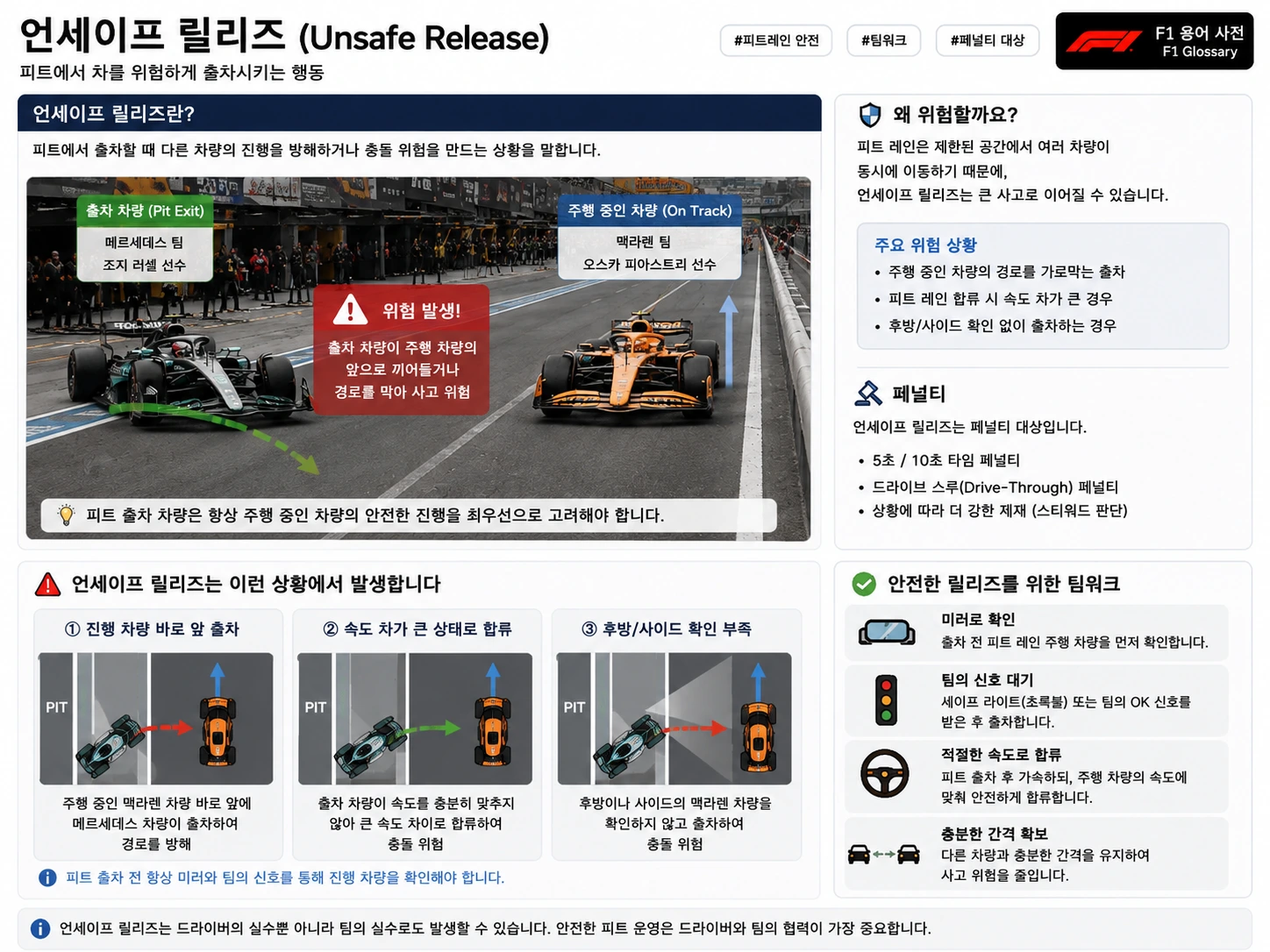
This penalty is imposed when a race car is released back into the pit lane after a pit stop in a manner that obstructs the path of other passing vehicles, creating a risk of collision, or when the car is released with tires not fully secured, leading to a dangerous situation. The penalty is strictly applied to the car and driver, whether the incident results from the driver's direct fault or a mistake by the pit crew (team) in giving the release signal.
🏆 Race Case Study
2025 Miami GP Sprint — Verstappen's Unsafe Release
During the 2025 Miami GP Sprint, Max Verstappen collided with Kimi Antonelli, who was driving down the pit lane, as Verstappen exited the pit box after a tire change. The incident occurred because Red Bull released Verstappen too early, preventing Antonelli from entering his pit box normally. The stewards deemed this an unsafe release and issued a 10-second time penalty to Verstappen. This incident exemplifies the critical importance of a team's decision-making when releasing a car in a narrow pit lane.
📺 Race Context & Viewing Tips
Frequently asked questions
When is a release from the pit box considered unsafe?
What penalty can be given for an unsafe release?
🔎 Looking for another F1 term?