Track evolution
트랙 에볼루션
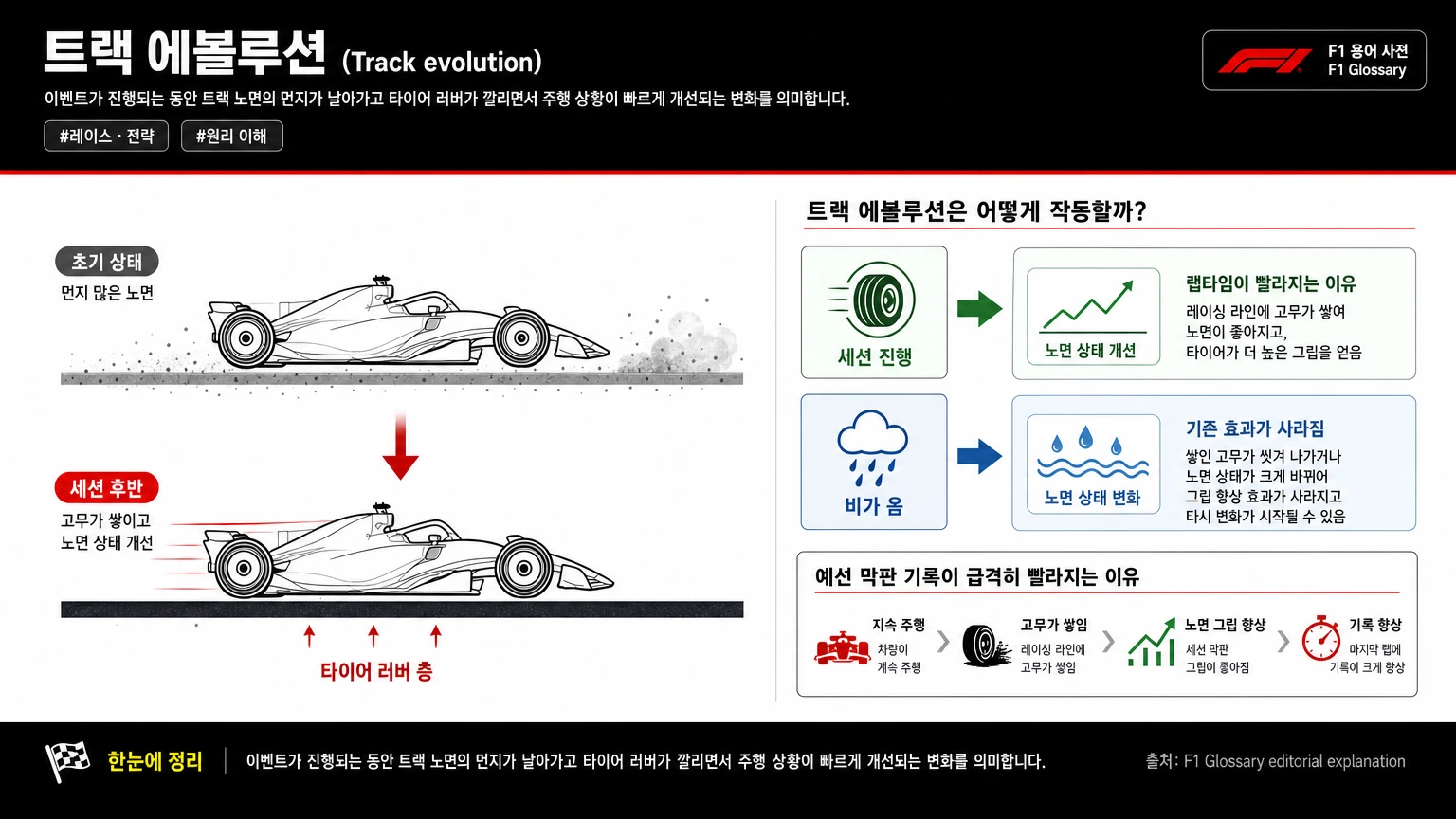
This refers to the rapid improvement in track conditions during an event as dust is cleared from the track surface and rubber from the tires is laid down. The extent of this change is more pronounced on street circuits or tracks with low usage, and accurately predicting it is crucial for qualifying and other sessions.
🏆 Race Case Study
Why Lap Times Improve Late in Qualifying
During a dry qualifying session, repeated running lays more rubber onto the racing line. As grip improves through track evolution, drivers can often set significantly faster lap times during their final runs.
📺 Race Context & Viewing Tips
Frequently asked questions
Why can track evolution make lap times faster later in a session?
As cars circulate, rubber is laid down on the racing line and the track surface can improve, allowing the tyres to generate more grip.
What happens to track evolution when it rains?
Rain can wash away deposited rubber or significantly change the surface condition, removing much of the previous grip improvement and effectively resetting the evolution process.
🔎 Looking for another F1 term?