Dirty air
더티에어
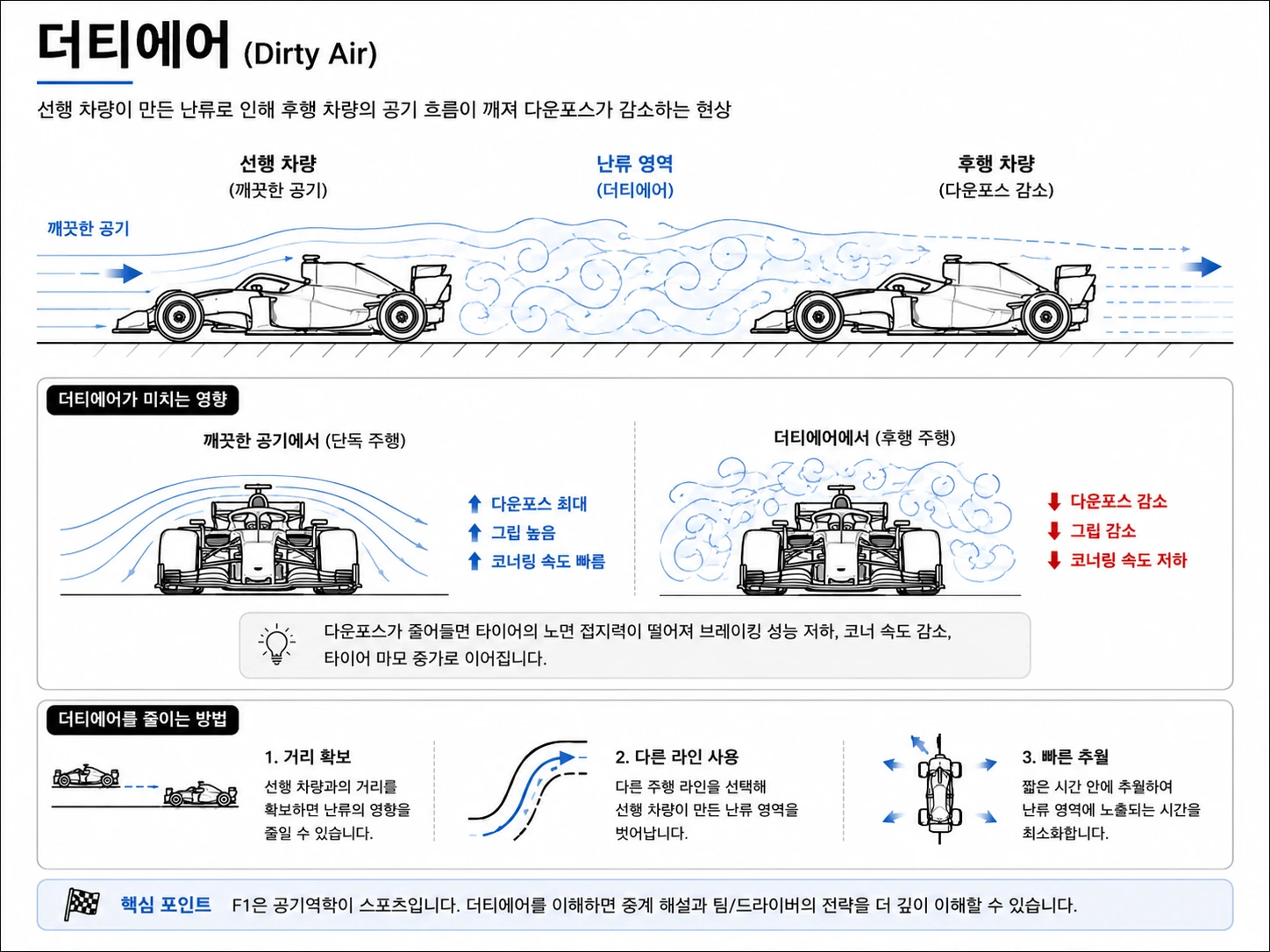
The turbulent air created in the wake of a leading car is known as dirty air. This turbulent airflow reduces downforce on the following car, destabilizes the chassis, and causes the tires to overheat more easily. It is one of the primary factors that make overtaking difficult in F1.
🏆 Race Case Study
As you approach an overtaking maneuver, the closer you get to the car ahead, the more challenging the corner becomes.
When a trailing car closes in to within approximately one second of the car ahead, it is significantly affected by the turbulent air generated by the leading car in corners. This reduces downforce, leading to a loss of front grip and making the car prone to understeer, which can make it challenging to follow closely. As a result, drivers may deliberately choose a different line in corners to find clean air or adjust their distance when entering a corner, then close the gap again on the straight to create an overtaking opportunity.
📺 Race Context & Viewing Tips
Frequently asked questions
Why does dirty air make overtaking more difficult?
What is the difference between towing (slipstream) and dirty air?
🔎 Looking for another F1 term?