Motor Generator Unit - Kinetic
MGU-K
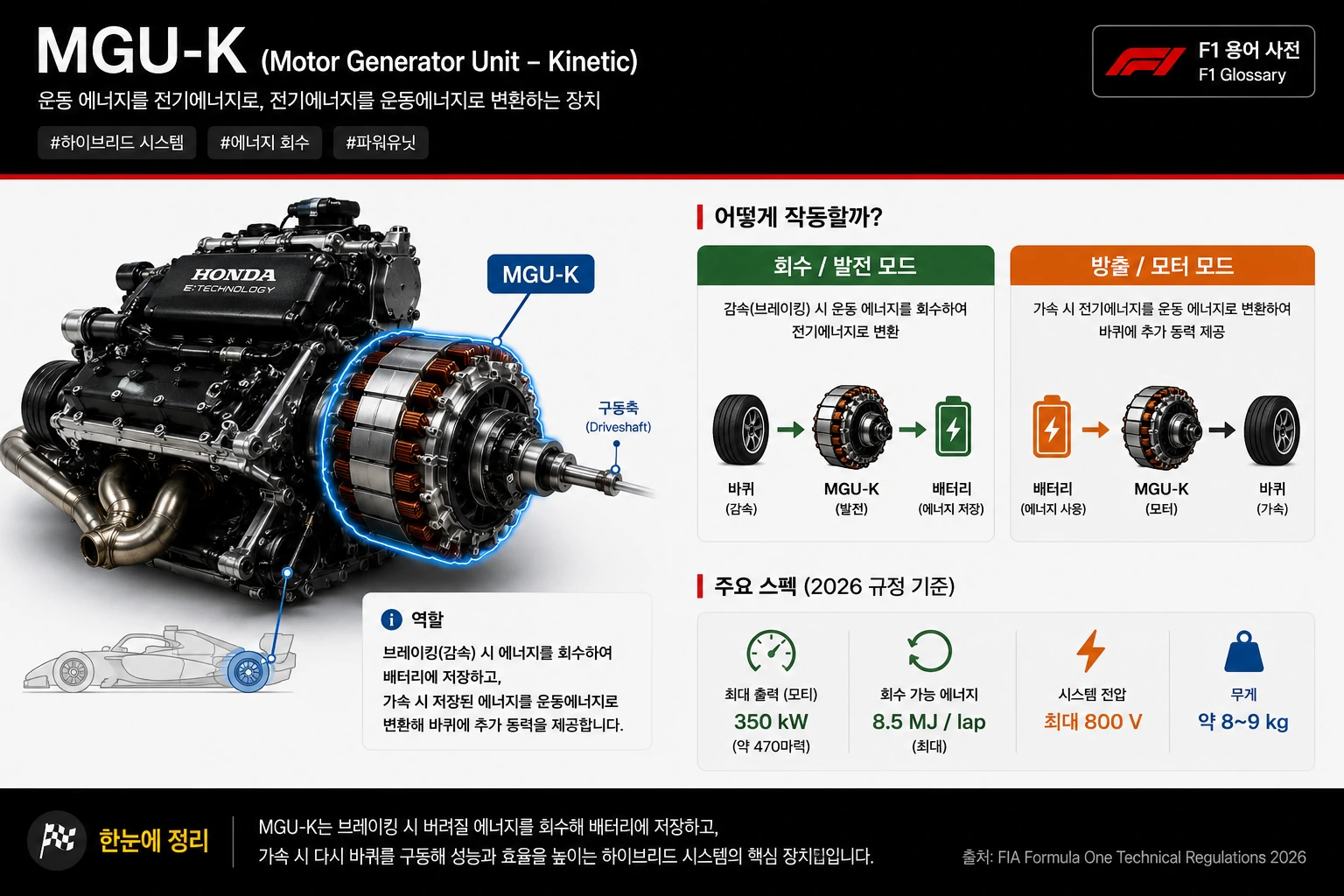
This is a key electric motor that converts the heat and kinetic energy wasted during braking into electricity, storing it in the battery, and then providing additional power to the wheels during acceleration. From the 2026 power unit regulations, one of the existing components (MGU-H) will be eliminated, and instead, the output of the MGU-K will increase nearly threefold from the current approximately 160 horsepower (120kW) to an impressive 470 horsepower (350kW).
🏆 Race Case Study
MGU-K, which recovers braking energy for reuse in acceleration
When a driver decelerates to enter a corner, the MGU-K recovers some of the kinetic energy generated from the drivetrain and converts it into electrical energy. The stored energy is then reused during acceleration phases to provide additional power. This is a representative example of energy recovery and utilization that F1 cars repeatedly employ each lap, more so than in specific races.
📺 Race Context & Viewing Tips
Frequently asked questions
Does MGU-K work on the same principle as regenerative braking in a road car?
Can an F1 car keep driving if the MGU-K fails?
🔎 Looking for another F1 term?